
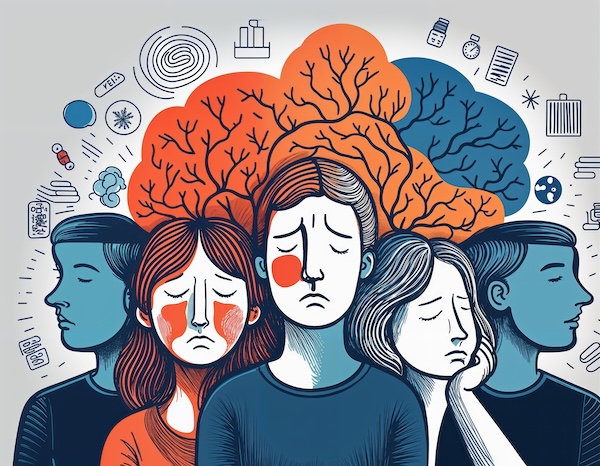
King David, the sweet singer of Israel, questioned Hashem about the role of madness in the world. “Master of the universe! You have created the entire world with such perfection, all with the exception of madness. What possible delight can You have from the madman? He wanders around aimlessly, tearing at his clothing while being laughed at and chased by children. Does this give you any pleasure? Why then did you create madness in Your perfect world?” Hashem answered David Hamelech by saying, “David, do you question the value of madness? I swear by your life that one day you will need the institution of insanity.”
King David was on the run from Shaul Hamelech, who was pursuing him with jealous rage. Shaul thought that David was trying to usurp his throne, and therefore, he hunted him down to quell this perceived rebellion. David fled to the Plishti city of Gas, where he encountered the Plishti king, Achish. Achish’s bodyguards immediately recognized King David as the brave warrior who slew the giant Goliath, the brother of Achish. Thirsty for revenge, they requested King Achish’s permission to kill David. Recognizing that he was in mortal danger, David feigned madness so the Philistines would think that this couldn’t possibly be the mighty King David. He dribbled into his beard and wrote nonsense on the doors of the palace.
Convinced that this was just a helpless madman who bore a resemblance to King David, Achish drove him away from the palace, and David’s life was saved1. David now understood the purpose of madness and acknowledged that Hashem’s works are flawless. In great appreciation, King David composed Tehillim 34, thanking Hashem for sparing his life.
How does Yiddishkeit treat those who are suffering from mental disabilities? Judaism believes that every person is created btzelem Elokim – in the image of Hashem2 and therefore possesses inherent greatness. The Divine image is not contingent upon bodily perfection, intelligence, or mental stability. Rather, it is inherent and immutable. From this perspective, mental disability does not diminish a person’s value in any way. Those suffering from mental health issues should be treated with the utmost respect and reverence.
A well-known passage in the Gemora recounts how Moshe questioned Hashem why some people are born with impairments. The Divine response suggests that such mysteries lie beyond human understanding. Hashem, in His perfect wisdom, creates every human with the physical, mental, and spiritual makeup that his soul needs. As we say in birkas hashachar every morning, ‘Thank You G-d for creating me with all my needs.’ Even someone burdened with mental health challenges is created just as Hashem wants them to be.
How does Yiddishkeit treat those who are suffering from mental disabilities? Judaism believes that every person is created btzelem Elokim – in the image of Hashem and therefore possesses inherent greatness. The Divine image is not contingent upon bodily perfection, intelligence, or mental stability. Rather, it is inherent and immutable. From this perspective, mental disability does not diminish a person’s value in any way. Those suffering from mental health issues should be treated with the utmost respect and reverence.
Various accounts in Tanach reflect an awareness of emotional suffering and deep psychological distress. King David frequently expresses feelings of despair, fear, and loneliness3. His words illustrate that even holy tzaddikim may struggle internally, and that when in distress of any type, the response should be calling out to Hashem. Similarly, the prophet Eliyahu, after a moment of great triumph, falls into despair and asks for death rather than having to flee from the wicked queen of Israel who sought to kill him. Instead of rebuke, he receives rest, nourishment, and gentle guidance from Hashem4.
The ramifications of mental health challenges also play out in halacha. When a person lacks mental clarity due to illness, he may be exempt from certain mitzvot. This reflects an understanding that mental health conditions can impair functioning in meaningful ways. This exemption is not stigmatizing but rather protective, acknowledging human limitations and displaying compassion for those who lack mental clarity through no fault of their own.
We are commanded to safeguard our health – וְנִֹשְמַרְתֶּם מְאֹד לְנַפְֹשֹתֵיכֶם. This is a call to maintain one’s own health, including mental health, in order to be able to care for others effectively. Neglecting one’s well-being is not seen as virtuous but as a barrier to fulfilling one’s responsibilities and potential.
The Jewish approach to suffering and resilience is to call out to Hashem, find meaning, seek support, and work toward healing. The concept of teshuvah also carries psychological dimensions, encouraging self-reflection, growth, and the possibility of change. This can be empowering for individuals facing mental health challenges, as it affirms that transformation and improvement are always possible.
When the Jewish People stood at Sinai ready to receive the Torah from Hashem in a display of great miracles, everyone present was healthy in mind and body. To receive G-d’s greatest gift, the Torah, the Jewish People had to possess perfect health and total mental clarity. Let us wait for the revelation of Mashiach to heal our minds and bodies so we can once again serve Hashem, perfect in mind, body, and spirit.
- Shmuel Alef, 21:14 ↩︎
- Bereishis 1:27 ↩︎
- Tehillim 3, 20, 22 and other psalms ↩︎
- Melachim Alef, Perek 19 ↩︎
Related articles
 What Makes a Good Year? The Secret to a Successful Rosh Hashanah
- Elul: A Time to Work on Relationships
- Rosh Hashanah: The Deeper Meaning of the Shofar
- “Circle, Arrow, Spiral”: The Dynamics of Change and Acceptance in Teshuva
- Is Self-Care Aligned with Torah Values?
- Why Do We Mourn on Tisha B’Av?
- Jewish Mourning: Feeling the Pain While Continuing Life
- Devarim and Tisha B’av: Turning Hatred into Love
- Interview with Stacey Goldman, Yoetzet Halacha
- The Halachot of the Three Weeks










More articles by Daniella Landau
- Elul: A Time to Work on Relationships
- The Shabbat Queen: The Life and Legacy of Henny Machlis
- Yael: A Woman of Courage and Bravery
- Delilah: A Wife Can Either Uplift Her Husband or Cause His Downfall
- When I Stopped Taking Small Things for Granted
- Ruchie Freier: A Trailblazer in Law, Faith, and Community
- The Life and Legacy of Dr Edith Eger z”l
- Why Organ Donation Is So Close to My Heart
- The Kiss in Judaism
- On the Eve of Redemption: The Story of the Korban Pesach