
“Mama Rachel cry for us again, won’t you shed a tear for your dear children, if you raise your sweet voice now as then, the day will come…”
Rachel Imeinu, of all the four Imahot, has become known to us as ‘Mama Rachel,’ the mother of all of Klal Yisrael. Rachel – the woman who passed away bearing her second child Binyamin, who never lived to raise him or mother him, who birthed less Shevatim than her sister Leah – is the one who is forever crowned as the quintessential Jewish mother. What makes Rachel Imeinu our ‘Mama?’
The story is told of Rav Chaim Shmulewitz praying at the kever of Mama Rachel. Amidst his heartfelt tefillot, Rav Chaim said to Rachel “Mama Rachel, HaKadosh Baruch Hu told you, ‘Hold back your voice from weeping,’ but I, Chaim your son, am asking you, ‘Cry, Mama Rachel! We no longer have the strength to endure exile. Weep for your children, Mama Rachel, that we should be redeemed already!’” Rav Chaim explained to his talmidim that although Hashem, Rachel’s father, had the right to ask his daughter to stop crying, we, Rachel’s children, can still ask her to cry for us. Because a mother is always there to cry for her children1.
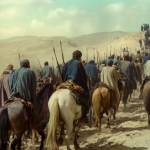
Rachel foresaw that one day her children would sin so terribly that they would be condemned to a long and painful exile. Through prophecy, Rachel knew that her children would one day spurn the warnings of the nevi’im and refuse to repent, yet her mercy was aroused. So Rachel requested to be buried on a roadside, outside the holy plot of Kever Machpela. Rachel prophesized that one day her beloved descendants would be marched in chains by this spot, heavy with sin, humiliation and pain; seeking comfort as they were dragged down to Babylonian exile after watching their glorious Mikdash disintegrate into flames. She wanted to mother them, to reassure and comfort them that there was hope. She wanted them to cry on her and in turn she was moved to cry for them.
Indeed, it was her tefillot and tears which penetrated Shamayim, superseding that of the Avot and the other Imahot, securing the promise ‘veshavu banim ligvulam’2 that one day we will return. Rachel opened her heart to become the mother of all because even in her death, she was concerned for the spiritual and emotional welfare of her children. And her tears never stop flowing for us3. From that lone grave, a deep wellspring of eternal motherly love can be touched and from it we can draw the power of our own tears in nourishing the souls of the nation today.
The Zohar tells us that when Mashiach comes, he will return the Jews from across the globe to Eretz Yisrael via the burial plot of Rachel Imeinu4. Her undying motherly compassion for us is one of the guarantees of our geula and Hashem ensures that though her grave is not in the holy plot of the other illustrious Avot and Imahot, no one will pass Rachel by. No one in the Jewish people will ever forget what they owe their Mama Rachel. We see this symbolically in the monument which Yaakov originally built by her kever. It had a column of 12 stones on it, one designated for each of the shevatim. Although Rachel only brought two of the shevatim into physical existence, she is the reason for – and the mother of – the spiritual existence of them all.
Another trait of motherhood we see manifest in Rachel is her patience. Rachel practiced patience for much of her life. She waited more than seven years to marry her destined husband and once married, she struggled with infertility. She watched as her sister birthed most of the shevatim, though she knew she was meant to jointly mother the people. And she continues to have patience and cry for us, her children somewhat lost and astray in galut, even though more than 2000 years have passed. We see that Rachel herself is aware of her awesome levels of savlanut when she says to Hashem5, “I let a rival [my sister] into my home and stayed silent, so too when the Jewish people let a rival [avoda zara] into their home, You should be silent.” And Hashem accedes to her powerful cry and continues to wait for us too.
Motherhood is also about sacrifice. Rachel sacrificed her entire marriage, her exclusive union with Yaakov both in this world and resting beside him after her passing, all for the sake of the future of the Jewish people. Rachel knew she was one of the Imahot, that her actions were not solely shaping her journey, but the destiny of the Jewish people at large. A mother knows that sometimes she gives something up, for the sake of a healthy, happy, holy home. Rachel was a master of sacrificing for the greater good. Before Yosef and Binyamin were even born she had given up everything for them and as she passed away, she gave up the place she was destined to rest in to give up even more for her non-biological children.
Rachel was patient in terms of time, waiting for her yeshua and ours, yet she also exhibited patience of circumstances. She never protested her situation and therefore she begs Hashem not to protest the state of the Jewish people. Mothers can spend so much of childrearing feeling impatient – when will they crawl? When will they walk? And then, when will they learn to clean after themselves? When will they show gratitude? But a wise mother bides her time, she waits. Not passively, but she actively anticipates the next stage while being fully present in the current one. A mother is tested in savlanut not daily, but every moment. Will she resent the task at hand- changing diapers or serving yet another meal, the behavior her child is exhibiting, the need to stay home instead of being elsewhere, or will she accept and even embrace it? Mama Rachel embraced it all, and continues to wait for us with seemingly endless, motherly patience.
Motherhood is also about sacrifice. Rachel sacrificed her entire marriage, her exclusive union with Yaakov both in this world and resting beside him after her passing, all for the sake of the future of the Jewish people. Rachel knew she was one of the Imahot, that her actions were not solely shaping her journey, but the destiny of the Jewish people at large. A mother knows that sometimes she gives something up, for the sake of a healthy, happy, holy home. Rachel was a master of sacrificing for the greater good. Before Yosef and Binyamin were even born she had given up everything for them and as she passed away, she gave up the place she was destined to rest in to give up even more for her non-biological children.
So impressive was this ultimate, dying sacrifice that Hashem says: “Since you relinquished your rightful place in the Cave of Machpelah in order to help your children, I, too, will relinquish My honor and help them too. Your children will not remain exiled forever. They will, eventually, return to their land.” It is not too popular to talk of the sacrifices of motherhood nowadays, as we live in a generation which tends to focus on how we can ‘have it all’ and ‘get back to normal’ as quickly as possible. Yet, the most exemplary and ideal of mothers showed us that our greatness lies in those sometimes painful moments of sacrifice.
Mrs Miriam Adani, director of the Kever Rachel Heritage Fund, made a powerful statement in her speech to my seminary. To translate into English, she said, “Eretz Yisrael is the home of the Jewish people, but a home is not a home without its mother”. Indeed, Mrs Adani has tirelessly campaigned for access to Kever Rachel for years. She speaks about motherhood and how Rachel, without ever raising her children, prepared herself for years to have children of the caliber of Yosef Hatzaddik, who rose to greatness in the spiritual abyss of Egypt and Binyamin, in whose merit Mordechai and Esther were able to facilitate the neis of Purim. All our motherhood, teaches Mrs Adani, is already inside of us. It starts before the birth and does not end when our children move out. Rachel’s chinuch existed before she ever had the opportunity to implement it. May we emulate the many beautiful facets of Rachel’s motherhood both into our avoda now and may we merit to invest those priceless traits into our future children.
- As told by Rav Reuven Taragin ↩︎
- Yirmiyahu 31:16 ↩︎
- Inspired by Mrs Aliza Silberstein, https://www.chabad.org/theJewishWoman/article_cdo/aid/444164/jewish/A-Jewish-Mother.htm ↩︎
- As quoted https://www.google.com/url?q=https://www.kerenkeverrachel.com/about-kever-rachel&sa=D&source=docs&ust=1764498265166657&usg=AOvVaw23o6uGXCSbVBazQkJiTj0B ↩︎
- Midrash Eicha Rabba 1:24 ↩︎
Related articles
 The Rain and the Soil: How Women Reveal the Hidden Torah
- Bereshit: Chava, Uncovering Women’s True Essence
- What Is the Nature of Simchat Torah’s Joy?
- Sukkot: Insights on the Four Species
- My Experience with Special Needs Individuals
- The Halachot of Yom Kippur
- Pregnancy and Fasting on Yom Kippur
- Yom Kippur: Dating Lessons from Moshe Rabbeinu and Adolf Hitler
- A Feminine Perspective on the Shofar
- Do Women Have the Obligation to Hear the Shofar on Rosh Hashanah?





More articles by Tamara Klein
- Bereshit: Chava, Uncovering Women’s True Essence
- What Is the Nature of Simchat Torah’s Joy?
- A Woman Spy: Where Halacha and Bravery Meet
- Defining the Tzaddik, Beinoni and Rasha
- A Feminine Perspective on the Shofar
- Ha’azinu: Tapping into the Holy Dew
- What Makes a Good Year? The Secret to a Successful Rosh Hashanah
- Nitzavim-Vayelech: Circumcision of the Heart
- Selichot: Peeling Away the Layers Over Our Hearts
- Ki Tavo: How to Battle Against Sichon