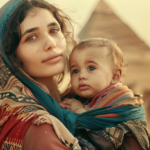

As months go, Elul falls between a rock and a hard place. It has a big job to do as it follows Av, a month where we are told to decrease in our happiness, and precedes Tishrei, the beginning of the year. We have just been deeply involved in intense feelings of loss relating to the Beit Hamikdash and our distance from Hashem while entrenched in the throes of galut. Then we step into Elul, and work to traverse the distance and increase our closeness with Hashem. The mazal, zodiac, of Chodesh Elul is that of the “betula,” virgo. Let’s explore how this mazal indicates the strength of the month and how we are guided to maximize its potential.
Rabbi Raskin delves into the zodiac of the “betula,” virgo. The name of Elul itself is well known to be an acronym for “ani l’dodi vdodi li,” I am to my beloved and my beloved is to me, found in Shir HaShirim 6:3. The letters in Hebrew spell out Elul. This sense of love and intimacy is the prism with which this chodesh is presented. Sefer Yetzirah, explained by the Tzemach Tzedek, states that each Jewish soul before birth is considered to be a betula because it has been untainted by sin and is closely connected to God. Even when the soul does come down to the world, it will always have God as its first love. It is dedicated to that love, and has no other goals outside of Godliness.
This sense of yearning to achieve this pure connection with Hashem again, our first Love, comes in strongly at this point in the year. After 10 months, we reach Elul when we work to prepare for the year to come. Elul comes at a time when the King is in the field as Rabbi Schneur Zalman of Liadi teaches. Usually a King can only be seen by His close advisors, however, during Elul, He is close and available for everyone. One just has to make the choice. We feel a sense of encouragement to leave our houses and go out to see the King. The act of going out actively leaves behind our past and our mistakes. It demonstrates a willingness to change and a commitment to starting that journey by simply stepping out. It is us returning to Hashem, to the intimacy of His smiling countenance. A mindset shift in a practical way.
This new state of mind brings us back towards a state of “betula.” Every time the soul engages in a mitzvah and especially of teshuva, it is as if it reconnects to its Beloved for the first time. Teshuva, repentance, is the impetus of change and imbues in the month that of reflection and reckoning. It removes the staining of the impurities of the world, and empowers the soul to become a “betula” once again. Through the mechanism of teshuva we can retroactively gain this state again. The Kitzur Shulchan Aruch (128:1) dictates that “from Rosh Chodesh Elul until after Yom Kippur, are days of Divine favor. Even though throughout the entire year the Holy One, blessed is He, accepts the repentance of those who return to him wholeheartedly, nevertheless, these days are unexcelled and most suitable for repentance, because they are days of mercy and favor.” Working towards achieving this closeness by connecting to the potential of this time period with the act of teshuva.
After 10 months, we reach Elul when we work to prepare for the year to come. Elul comes at a time when the King is in the field as Rabbi Schneur Zalman of Liadi teaches. Usually a King can only be seen by His close advisors, however, during Elul, He is close and available for everyone. One just has to make the choice. We feel a sense of encouragement to leave our houses and go out to see the King. The act of going out actively leaves behind our past and our mistakes. It demonstrates a willingness to change and a commitment to starting that journey by simply stepping out. It is us returning to Hashem, to the intimacy of His smiling countenance. A mindset shift in a practical way.
One aspect of teshuva is that of giving tzedaka. “U’teshuva, u’tefillah, u’tzedakah maavirin et roah hagezeirah,” repentance, prayer, and charity remove the evil decree. The ability to give charity and remove the stain of sin restores the state of purity of the betula. Through the act of giving to others we also bring down the 13 attributes of mercy of Hashem that we invoke during the time of Elul. The micronumbers in gematria of the word “elul” is 13 as well. One for aleph, 3 for lamed, 6 for vav, and 3 for lamed. This is also brought out through the letters “gimmel daled.” Gimmel and daled represent “gomel dal,” giving charity as well as “to draw down” based on the Sefer HaYetzirah. This sense of drawing down brings us closer to the Source of it all. It pushes us to separate from the animal instincts in us and closer to our innate aspect of Godliness.
Rav Pincus expounds on Rabbeinu Yonah’s teachings of teshuva. Rabbeinu Yonah says that the act of throwing away our sins brings us back to a state of a newborn – one who is free of all sins, untapped potential, and the beginning of a journey. There is this aspect of turning to a new page. The Rambam takes it as far as to say that teshuva can even change who you are; “I am another, and I am not the person who did those actions.” We can go from the state of a non-betula, and be transformed through teshuva to become a person who is a betula. Quoting Rashi on Yeshaya 33:13, Rav Pincus explains that someone who is habituated to doing what they want, without consideration for Hashem and their relationship with Him, are considered to be “rechokim,” far away. Engaging in physical acts that re-habituate ourselves to be “krovim,” close, will set us up to transform from who we are to a betula, beginning state.
In addition, another acronym of the name Elul is, “ish l’reieihu u’matanot l’evoyinim,” one to his friend and gifts to the poor” from Megillat Esther 9:22. This act of giving to others is innately connected to the chodesh itself. The ability to reflect on ourselves and our inner purity is to come closer to Hashem. Giving to others is a natural progression of self-reflection in the sense that you notice what you have, who bequeathed it to you, and what you can do with it. This perspective pushes us to give from what we have to others just as Hakadosh Baruch Hu gave to us. The physical act of giving has spiritual consequences that deepen our connection to Hashem.
The month of Elul is also connected to the tribe of Gad as they are also made up of the same letters, as the Likutei Moharan (Part II, 73:1:3) teaches. They were one of the shevatim that when Bnei Yisrael was preparing to enter Eretz Yisrael with Moshe Rabbeinu wanted to live on the other side of the Yarden river. The conditions upon which they were given permission to do so, was that they would need to join Bnei Yisrael for the fight in order to conquer the land of Israel. They did so, and were in fact the first ones to enter and with their might they were successful. This success is attributed in Chassidus, as taught by Rav Aaron Raskin, to the tefillin that they wore on their left arm. This tefillin directly connects to another aspect of teshuva, which is tefillah. In order to achieve the spiritual intimacy that the betula mazal represents we must engage in physical acts such as tefillin and tefillah.
The Sefat Emet (Devarim 4:2) teaches that during the time of Elul, which is a time of closeness at the end of year, it is essential that “one connects everything to its upper root.” We become influenced and tainted during the year, and now we must turn inward and focus on ourselves. We are taught, “chayecha kodmin,” your life comes first. As such, he explains that this is how we can fix ourselves with this process of teshuva. By doing so, we automatically rebind ourselves to Hashem and reset our relationship with Him. The Sefat Emet further details that the mazal of the betula symbolizes that the inner purity of the soul of Bnei Yisrael is one that remains untouched by the external forces of our surroundings in this world. He quotes Shir HaShirim 4:12, “A locked-up garden, a sealed fountain” referencing this guarded purity. The time of Elul itself is one that brings with it this sense of return and reconnection.
The mazal of Elul as the betula should empower and give hope to all women. The purity that we are created with never leaves us. It is apparent in all our abilities, gifts, and God-given talents. The way in which we choose to use them, the influences we choose to allow into our lives, and the power that we give them will determine how we are able to build a relationship with Hashem. The month of Elul imbues within its days a sense of closeness with our Creator, space to return, and ways in which to rebuild and strengthen our relationship with Him. Choosing to do more, give more, and engage in acts of teshuva is how we can traverse this time in Elul and work to achieve a more connected and intimate relationship with Hakadosh Baruch Hu, our “melech” that is “basadeh.”
Related articles
 What Is the Nature of Simchat Torah’s Joy?
- Aseret Yamei Teshuva and Short-Term Kabbalot: Whom Are We Fooling?
- A Feminine Perspective on the Shofar
- Blowing the Shofar: Confusing the Satan?
- The Interconnection between Rosh Hashana and Yom Kippur
- What Makes a Good Year? The Secret to a Successful Rosh Hashanah
- Elul: A Time to Work on Relationships
- 3 Ways to Co-Create Your New Year
- Ani Le’Dodi V’Dodi Li: Doing Teshuva Out of Love
- Selichot: Peeling Away the Layers Over Our Hearts








More articles by Shani Gelb
- What Is Prophecy and Why Don’t We Have It Nowadays?
- What Is the Purpose of the Oral Torah?
- Contrasting Women and the Sefira of Gevura
- The Role of Jewish Women in the Geula
- What is a miracle and how are we supposed to interact with it nowadays?
- Purim as the Counterpart of Matan Torah
- The Implications of the Mitzva of Kiddush Hashem
- On the Biblical Origins and Effectiveness of Shidduchim
- Is Eating Healthy a Mitzvah?
- Emerging From the Waters: Explaining the Mitzvah of Mikvah