
Boundaries. It’s a buzzword – and one that has perhaps become associated with certain behaviors or values antithetical to Torah life. We set boundaries in relationships – only to sometimes miss out on doing chessed. We place boundaries on our time – not realizing it can appear selfish when applied inappropriately. We make boundaries on our property – perhaps forgetting that all we own is a gift from above. Yet, in this week’s parsha, the pesukim reference several times creating a ‘gevul’; a boundary. Matan Torah only takes place on a strong foundation of boundaries, of limits and of prohibitions. So, let’s explore the Torah’s view on boundaries as seen in the spiritually climactic moments of Kabbalat HaTorah.
The pesukim leading up to Matan Torah begin with the beautiful promise of Hashem that if we keep the Torah and mitzvot we will be Hashem’s segula, His treasure and we will become a ‘mamlechet kohanim v’goy kadosh,’ a kingdom of priests and holy nation. Hashem reminds us how He acted for us in Egypt and carried us on eagle’s wings, to Him. Following this poignant image of our nation’s potential and precious value, Hashem commands Moshe to tell us ‘Make a boundary with the people.’
The word the pasuk uses is ‘vehigbalta’ from the word ‘gevul’, a marked boundary. We may have experienced a national high, emerging from Egypt, sustained through the desert and now finally, poised to receive the holy Torah, but we are brought back down to earth with these practical pesukim. Before the thunder and lightning, the voice of Hashem and the total silencing of every tweet in the sky – Hashem tells us to step back. Our first introduction to Torah is not the noise and lights of Har Sinai, but the warning – do not touch the mountain lest you die.
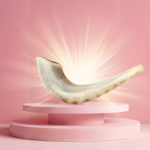
The aseret hadibrot themselves, ten Divine commandments etched into sapphire brick and uttered at Sinai following the powerful voice of the Shofar can each be seen as their own gevul. The 10 commandments are, in essence, 10 boundaries. We acknowledge that we are not masters of ourselves but we submit to Hashem. Even when recognising Hashem, we are warned against placing faith in false gods. Using Hashem’s name in vain, breaking Shabbat and disrespecting parents are similarly off limits.
The pesukim delineate further details which Moshe was to relay to the people. For three days, the men had to separate from their wives, purifying themselves and showing restraint. Moshe was positioned at the top of the mountain, Hashem ushered the Kohanim to the next closest level and finally, the people were stationed at the foot of the mountain.
In Pirkei Avot, the Mishna describes 50 ways to acquire Torah and one is “hamakir et mekomo” one who recognizes his place. Innate in the establishment of different ranks and roles are boundaries. Knowing my place entails knowing my limits, knowing the areas which are out of bounds for me. A makom, like a gevul, has fixed parameters that cannot be crossed. A designated area of space which cannot be expanded or enlarged.
There are mitzvot Kohanim can do, places they can enter which no one else can. The nation is told to stand back and acknowledge that while they behold the majestic, might and awe inspiring scenes and sounds of Sinai, their position is the bottom of the mountain. We accept Torah with the knowledge that some in the nation will have a different, more elevated pathway– and we humbly acknowledge our place.
The aseret hadibrot themselves, ten Divine commandments etched into sapphire brick and uttered at Sinai following the powerful voice of the Shofar can each be seen as their own gevul. The 10 commandments are, in essence, 10 boundaries. We acknowledge that we are not masters of ourselves but we submit to Hashem. Even when recognising Hashem, we are warned against placing faith in false gods. Using Hashem’s name in vain, breaking Shabbat and disrespecting parents are similarly off limits.
The second half of the luchot places boundaries on life, relationships and property forbidding us from murder, adultery and stealing. We are cautioned not to act a false witness, a boundary on our mouth and finally not to be jealous, an implied boundary on our wandering, desirous eyes. Accepting the Torah means surrendering to Hashem’s spiritual and emotional boundaries. We cannot just blurt out His name in frustration, cannot strike a match if it is Friday after sundown. We may not treat our parents as equals, there is a hierarchy, nor can we borrow a pen without permission. In all these areas, Hashem tells us – hands off, there is a gevul here.
“Hagbel et hahar vekidashto”: create a boundary with the mountain and sanctify it. Where we find boundaries, we find kedusha. Much as an unlabelled map would just be a chaotic image of floating islands, a life without the boundaries of Torah would be a dangerous, untethered place. Rebbetzin Gottlieb explains that things which are forbidden are named assur (tied up) because they are the things which prevent us actualising our best selves. The “nos” of Yiddishkeit are just as essential to our identity as the “yeses.”
In her book, The Boundary Is You, Chany Rosengarten writes about how the world is built on boundaries. We truly find them everywhere.
“Take the ocean. The ocean wants to cover all of the earth. Every moment of every day, the ocean throws itself against the sand, pounding the seashore with desperate waves. The land stands firm: ‘Until here you go, and no further.’ And the waves retreat…”
Perhaps Hashem created these bounds of nature to act as a mashal for the spiritual boundaries He expects from us.
As Jewish women, we are expected to keep a kosher home. We cannot put a leaf in our salad until we have ascertained it is bug free. We cannot indulge in any dairy delight if we are fleishig, no matter how strong the craving. We are charged with the responsibility of nidda, where we take space and hold back from the physical part of our relationship, demonstrating true restraint. When hurt, we cannot lash out. When rushed, we cannot break Shabbat. When resentful, we may not gossip.
We may have desires and temptations roaring inside of us like stormy waves. But inside each of us is that gevul we committed to at Sinai. A seashore which contains the tempestuous waves. Each time we keep to a Torah boundary, no matter how challenging, it is akin to being mekabel the Torah all over again…
Related articles



More articles by Tamara Klein
 Bereshit: Chava, Uncovering Women’s True Essence
- What Is the Nature of Simchat Torah’s Joy?
- A Woman Spy: Where Halacha and Bravery Meet
- Defining the Tzaddik, Beinoni and Rasha
- A Feminine Perspective on the Shofar
- Ha’azinu: Tapping into the Holy Dew
- What Makes a Good Year? The Secret to a Successful Rosh Hashanah
- Nitzavim-Vayelech: Circumcision of the Heart
- Selichot: Peeling Away the Layers Over Our Hearts
- Ki Tavo: How to Battle Against Sichon