Parshat Shemini contains many of our kashrut laws: the fish, birds and animals we may and may not eat as well as the prohibition to consume bugs. As Jewish women, we are entrusted with the kashrut level of our homes. We are designated as the Mashgiach, the supervisor: ensuring that no milk splashes onto the meaty side, that every piece of lettuce in our salad is bug-free and that we purchase food only with a reliable hechsher. The kitchen can sometimes become a minefield of halachic shailot: I cut an onion with a meaty knife and added it to a milky dish, what do I do? I checked my salad leaves for bugs and by mistake mixed one of the questionable leaves back into the salad! The milky spoon is in the meaty dishwasher… Let’s explore some of the hashkafa behind kashrut. Although the mitzva itself is a chok, a commandment we cannot understand, there is still much depth to be gleaned from it. Let us explore some of the hashkafa behind kashrut.
As referenced in an earlier article, the prohibition to eat bugs in this week’s parsha is in fact linked with our Exodus from Egypt.
“…You shall not defile yourselves through any creeping creature that crawls on the ground. For I am Hashem Who has brought you up from the land of Egypt…” (Vayikra 11: 44-45).
The pasuk tells us that since Hashem took us out of Egypt, we should be careful not to contaminate ourselves by eating bugs. Rashi highlights the use of the word “hamaaleh” which connotes ascent, aliya as opposed to yetzia which just means leaving. The purpose of leaving Egypt was to become elevated people. The entire Exodus was worth it just in order for us to refrain from eating bugs. Kashrut separates us from the other nations and raises our standards to be the lofty people we were taken out of Egypt to be.
Our modern-day culture may have normalised snacking or eating out gourmet but for a Jewish person, eating isn’t just mindless munching nor is it a pleasure to be worshipped. Eating is divine, it becomes us. Rabbi Tzvi Freeman explains that kosher means fit for use, it announces that the food we are about to eat is fit to enter us – and like a korban, elevates us. Like a kohen eating the parts of the offering designated for him, we sit at our shulchan ready to infuse ourselves not only with physical energy, but spiritual.
This idea is echoed in the Sefer Hachinuch, where the author explains that although human wisdom cannot fully grasp the ways of Hashem, Hashem only commanded kashrut for our benefit. In the spiritual world, there are certain foods which can cause harm to our neshamot in ways we cannot see. When describing the impact of eating forbidden foods, the pasuk uses the word (Vayikra 11:43) “Venitmeitem bam” meaning “You shall become impure through them.” The Gemara (Yoma 39a) writes on this that we can read the verb as ‘venitamtem’ which means to be confused or blemished. Aveirot, and specifically the consumption of non-kosher food causes timtum halev, a blemish to the heart. It makes us foolish and lacking in clarity. Rabbi Isaac Bernstein called this ‘spiritual cholesterol,’ a barely noticeable but insidious build-up of a spiritually harmful substance. Rabbi Ari Enkin1 explains it as a ‘weakening of one’s spiritual sensitivity and enthusiasm.’ Eating non-kosher foods blemishes our heart, confuses our soul and dulls our passion for ruchniut.
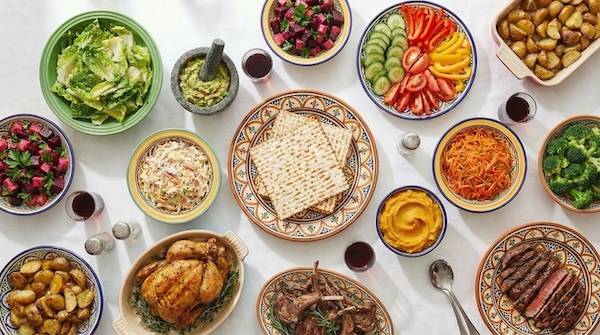
As an interesting aside, this concept exists in reverse as well. The Ramchal writes that eating matza is spiritually healthy for the soul. If treif is ‘spiritual cholesterol’ then matza is ‘spiritual vitamins.’ It strengthens our soul.
We see the importance of what goes into our mouth from Moshe Rabbeinu who refused to nurse from an Egyptian. Although this is technically permitted in halacha, Moshe wanted only the purest milk with no potentially intervening treif substances which could cause spiritual damage down the line. Conversely, we see the beautiful effects of pure Jewish milk in Sara Imeinu who nursed many babies who went on to convert to Judaism. The Mesilat Yesharim (Chap 11) tells us that the sin of forbidden foods is in some ways the worst of sins because the food enters our very being and becomes us. Moshe did not want to ingest foreign milk because of the risk to his neshama while the babies fed by Sara were influenced to keep a Torah life, all from the milk they imbibed in their infancy2.
Our modern-day culture may have normalised snacking or eating out gourmet but for a Jewish person, eating isn’t just mindless munching nor is it a pleasure to be worshipped. Eating is divine, it becomes us. Rabbi Tzvi Freeman3 explains that kosher means fit for use, it announces that the food we are about to eat is fit to enter us – and like a korban, elevates us. Like a kohen eating the parts of the offering designated for him, we sit at our shulchan ready to infuse ourselves not only with physical energy, but spiritual.
This rings especially true when we look at what we are allowed to eat. Rabbi Ari Kahn4 points out that the animals we are allowed to eat must be herbivores not carnivores, suggesting a certain refinement. The herbivore animals we eat: sheep, deer and cows for example are known as more timid, non predatory, modest and quiet animals – traits which we seek to emulate rather than the predatory animals and birds which pounce on their prey in a cruel way. While for fish, we are only permitted to eat those with fins and scales, those who have the ability to swim against the current. Klal Yisrael has always swam against the turbulent currents of our times.
Rabbi Mordechai Wollenburg5 writes about the depth of the kashrut signs for an animal: chewing the cud and split hoofs. Chewing the cud is symbolic of thinking matters over, deeply and thoroughly, not rushing into decisions impulsively. Rashi at the beginning of Vayikra (1:1) tells us that Hashem gave Moshe time and space to process the Torah he was taught before moving onto the next chapter. Ruchniut requires chewing over. Hooves are the body part closest to the ground, representing earthliness, gashmiut. The requirement to have a slight indent in the hoof signals the Jewish way of elevating the most mundane of acts.
Us women may sometimes feel that we are in charge of nothing more than the proverbial hooves: cooking, cleaning and childcare. But if we can find the “cloven” elements in our mundane tasks, the hidden spiritual aspect in all we do, we can truly use our food to elevate us to the greatest of heights, like a korban on a mizbeach.
- In this article: https://outorah.org/p/187823/ ↩︎
- Discussed in article above, Rabbi Enkin ↩︎
- As in this article, https://www.chabad.org/library/article_cdo/aid/60319/jewish/Why-Do-We-Keep-Kosher.htm ↩︎
- As in this article, https://aish.com/you-are-what-you-eat-2/ ↩︎
- As in this article, https://www.chabad.org/parshah/article_cdo/aid/412491/jewish/You-Are-What-You-Eat.htm ↩︎
Related articles
 What Makes a Good Year? The Secret to a Successful Rosh Hashanah
- A Feminine Perspective on the 17th Tammuz
- Shemini: Jewish Women, The Mashgichot of their Households
- Miketz: Yosef, Establishing the Standards of Kedusha for the Jewish People
- Emerging From the Waters: Explaining the Mitzvah of Mikvah
- Acharei Mot: Distancing Ourselves from Non-Jewish Practices
- Shemini: Ask Your Elders!




More articles by Tamara Klein
- Bereshit: Chava, Uncovering Women’s True Essence
- What Is the Nature of Simchat Torah’s Joy?
- A Woman Spy: Where Halacha and Bravery Meet
- Defining the Tzaddik, Beinoni and Rasha
- A Feminine Perspective on the Shofar
- Ha’azinu: Tapping into the Holy Dew
- What Makes a Good Year? The Secret to a Successful Rosh Hashanah
- Nitzavim-Vayelech: Circumcision of the Heart
- Selichot: Peeling Away the Layers Over Our Hearts
- Ki Tavo: How to Battle Against Sichon