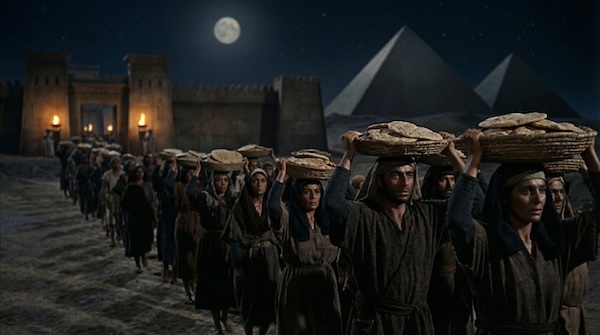
This article is dedicated to all those in Eretz Yisrael who have spent the last few weeks in and out of the bomb shelter. And honestly, much of the last few years in and out of crisis mode and wartime.
With cancelled school, constantly changing regulations and alerts driving people to the ma’amad by day and night, we may wonder, where is the cheirut this year? Pesach is the Yom Tov of our freedom, so why do we feel enslaved once more?
Incredibly, if we look at the pesukim, the first Pesach in our history did not take place at a time of freedom at all. It took place in the depths of galut, when there was nothing to celebrate. We sat with our matza and marror, we slaughtered our lambs and we gathered with our family – all while still enslaved in Egypt. We were not yet free people, yet we had our mitzvot: the blood of the korban Pesach and the faith of our matza. Just like we celebrated Seder night then, we can sing under fire, even now.
The Maharal questions why we celebrate yetziat mitzrayim to such an extent when we have been enslaved and suffered under so many enemies and nations since. What is left to celebrate when we are still mired in galut? He answers that the greatest part of yetziat mitzrayim is not that we left slavery. It is that Hashem eternally transformed us into bnei chorin– free people. In the words of Mrs Yocheved Rottenberg: “We were imbued with an essence of freedom. That internal freedom has stayed with us no matter which galut we were in, and no matter which wars we are battling today… Our exile is circumstantial, our redemption is intrinsic.” War may be raging outside your window, missiles may be flying above, but when we sit down at our Seder table, we are truly free in our core.
When you huddle together in the maamad for yet another siren, with only your emuna for company, let it remind you of the night of makat bechorot, when we were commanded to stay inside our houses with our family, not to leave. Just as Hashem spared each Jewish home then, passing over at the door post, may He spare all our homes now. Pesach is leil shimurim, a night where Hashem guards and protects the Jewish people with extra attention and affection. Lean into His protection tonight.
As we sing so poignantly in vehi sheamda, in every generation there are those that rise up to destroy us. But it is Hashem Who saves us, each and every time. This won’t be Klal Yisrael’s first Pesach threatened by war, but we can be reassured that we know the ending. Hashem always takes care of us. And through it all, through every struggle of Jewish history, in every corner of the world, families have always held onto their Pesach Seder.
In Hallel, we recite David Hamelech’s beautiful words “pitachta lemoseiray” “You have opened my bonds.” As we say these words, we can envision Hashem releasing us from our shackles. The shackles of our yetzer hara. No matter what situation we find ourselves in over Pesach, tonight we are free. Free to keep Torah and mitzvot. Our soul is free to fly, soar and achieve all it was brought to the world to do. Our bodies may feel enslaved, in and out of the maamad, under stress and threat. But our soul, expressing itself in its best form through Torah, has never been more free.
There is a story of Reb Zusha who ended up in prison with his brother, Reb Elimelech. Together in the cell, the time for mincha came but since the guards left the chamber pot in their cell, they were unable to pray. Seeing his brother’s stricken face, Reb Zusha reminded him that in this case the best way to achieve dveikut with Hashem would be through not praying. The brothers thus began to dance, celebrating that they were doing the greatest avodat Hashem they could do in that moment: keeping Hashem’s will by not praying. Seeing their joy, the guards took away the chamber pot. Then the two men rejoiced even further as now they could pray…
This story is a story of cheirut. Even though physically these two tzaddikim were imprisoned, they were bnei chorin, free people. Freedom is their ability to know how to serve Hashem in each and every circumstance.
When you huddle together in the maamad for yet another siren, with only your emuna for company, let it remind you of the night of makat bechorot, when we were commanded to stay inside our houses with our family, not to leave. Just as Hashem spared each Jewish home then, passing over at the door post, may He spare all our homes now. Pesach is leil shimurim, a night where Hashem guards and protects the Jewish people with extra attention and affection. Lean into His protection tonight.
A popular song of the night is Dayeinu, meaning “it would have been enough for us.” Each step of our miraculous redemption would have been enough for a seder night, for joy and celebration and gratitude. While we sing Dayeinu, all we truly have on our table is matza, poor man’s bread, composed of mere flour and water. It is the basics, the staples of life which are the real cause for joy. Even in the ma’amad, we are surrounded by our family, neighbors, fulfilling the special mitzvot of the night. These are the true treasures to hold onto. Dayeinu.
Perhaps one of the least understood parts of the seder is Tzafun, the Afikoman. Eaten by chatzot (halachic midnight), this step of the seder is accompanied by special kedusha. Yet it follows a long night of storytelling, singing and of course Shulchan Orech, the seuda, so we may miss the depth. The Afikoman is broken at the beginning of the seder (Yachatz) then hidden (Tzafun) and often crushed accidentally in the process. The story of the Afikoman is not just a matza, but the story of our people. We too get broken into fragments, hidden in the painful parts of our history. But ultimately, the biggest piece is eaten and savoured – saved for last. Just like Jewish history. We can remind ourselves that although we are living through one of the broken pieces, and we may feel fragmented and crushed, we always emerge with the bigger half in the end. The piece of history that will satiate us forevermore.
Leshana haba birishalayim habenuya!
Related articles
 Unpacking the Complex Concept of Minhag Hamakom
- A Feminine Perspective on the 17th Tammuz
- A Married Woman Taking On Her Husband’s Customs
- Balance of Brotherhood: What We Can Learn from Rabbi Akiva’s Students
- The Omer: Counting Each Day and Making Each Day Count
- D’oraita vs. D’rabbanan: The Hidden Architecture of Halacha
- The Omer: A Long Chol Hamoed
- Embracing Health and Renewal: The Role of Women in Iyar
- One Day at a Time: The Spiritual Power of Counting the Omer
- The Halachot of Sefirat HaOmer








More articles by Tamara Klein
- Biblical Women and Music: A Love Story
- Lech Lecha: The Significance of a Name Change
- Why Is Rosh Chodesh Attributed to Women?
- Who was Naama, the wife of Noach?
- Bereshit: Chava, Uncovering Women’s True Essence
- What Is the Nature of Simchat Torah’s Joy?
- A Woman Spy: Where Halacha and Bravery Meet
- Defining the Tzaddik, Beinoni and Rasha
- A Feminine Perspective on the Shofar
- Ha’azinu: Tapping into the Holy Dew